





 CN


 HOME
What machine is used for silicone rubber mixing?
 Nov 18,2026

 JCT
What Machine Is Used for Silicone Rubber Mixing?
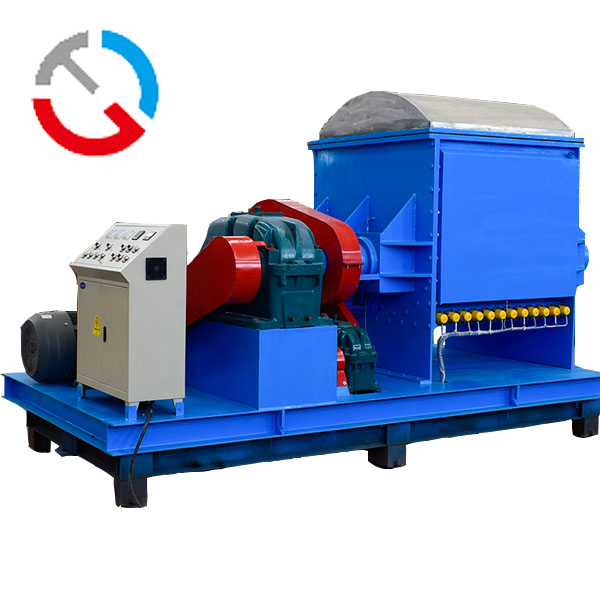
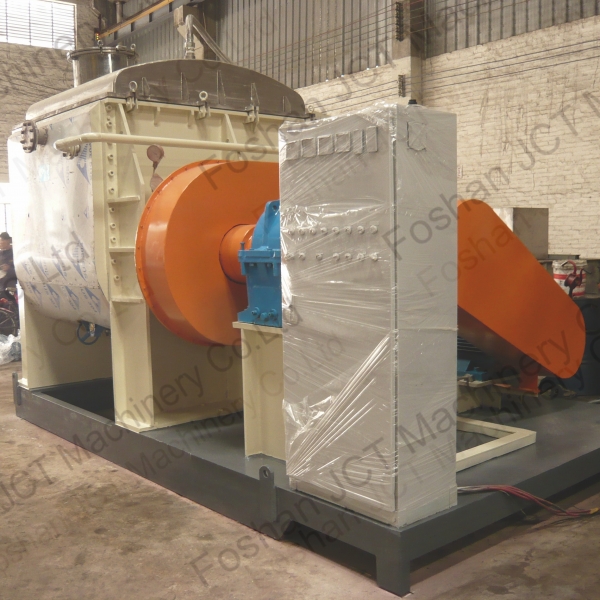
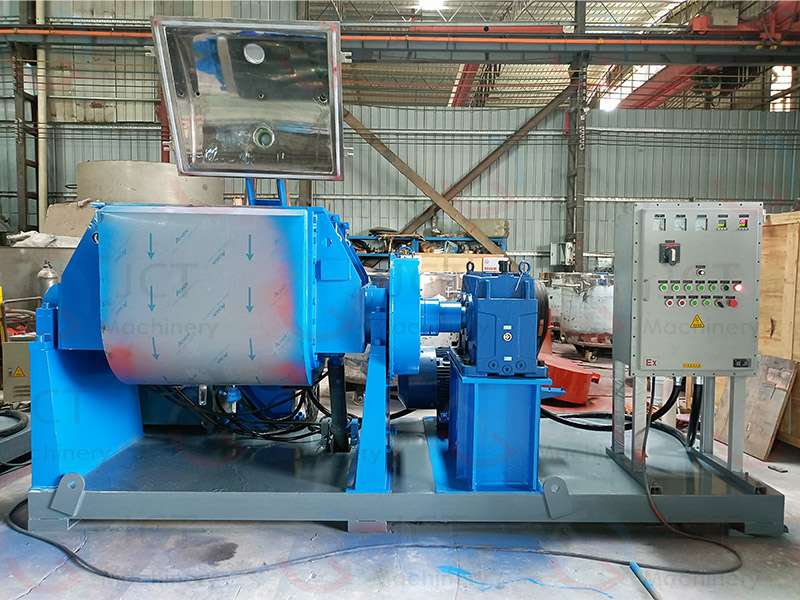
Short answer: Silicone rubber — particularly high-temperature-vulcanized (HTV) compound, often called silicone rubber compound — is mixed in a horizontal kneader, also known as a sigma blade mixer. A standard mixer only blends; a kneader works the material. Two sigma-shaped blades turning at different speeds squeeze, shear and fold a dense elastic mass until reinforcing fillers and additives are fully incorporated. It is the core machine of a silicone rubber compounding line.
Why an ordinary mixer cannot do the job
Silicone rubber starts as a gum-like, elastic solid — not a pourable liquid. Producing a usable compound means forcing reinforcing fillers, colorants and curing agents into that mass, breaking down agglomerates, and holding temperature steady while the material actively resists flow. Three things defeat a normal agitator:
- The material will not circulate. A high-viscosity, elastoplastic mass clings to the blades and spins as one lump instead of flowing through the vessel.
- Fillers do not wet out on their own. Dry powder trapped inside a rubbery mass needs repeated compression and folding, not gentle stirring.
- Air and heat must be controlled. Entrained air becomes voids in the finished compound, and shear heat can scorch a temperature-sensitive mix.
As JCT's own equipment note puts it: "A mixer blends; a kneader kneads." Sigma blades rotate at different speeds to squeeze and shear materials that ordinary mixers simply cannot handle — and silicone rubber is named as a typical example.
How a sigma blade kneader actually mixes silicone rubber
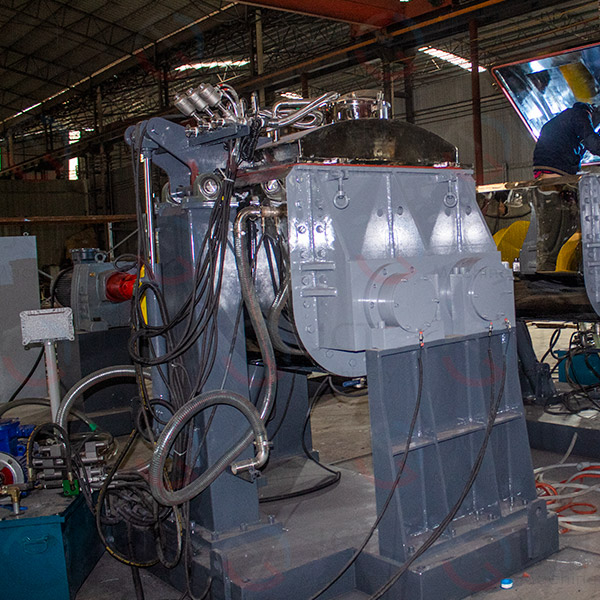
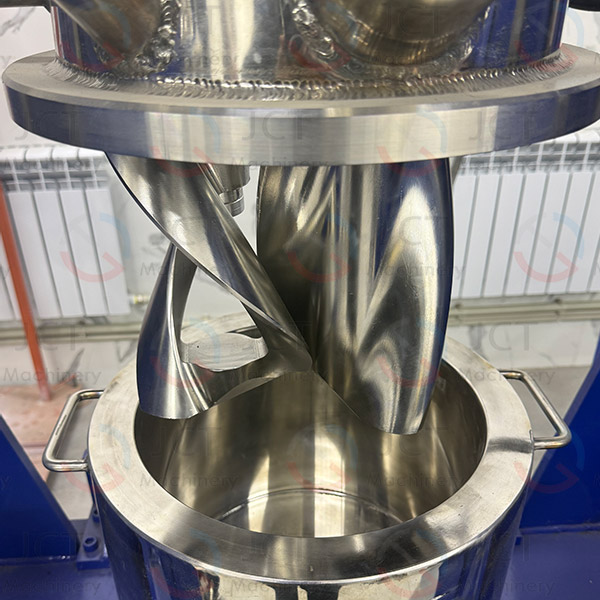
Two sigma blades counter-rotate at different speeds — a common configuration is 42 rpm and 28 rpm. Because the speeds differ, the material is continuously caught, compressed between the blades and the chamber wall, then folded back into the centre. This repeated squeeze–shear–fold cycle is what disperses filler into silicone gum.
The chamber is W-shaped so the mass is drawn down into the nip between the blades rather than riding up the wall. Around it sits a jacket with internal flow-guiding plates; hot oil, electric jacket heating, steam or cooling water can be selected or combined, which is how the compound is kept in its working temperature window. A vacuum system removes entrained air, and — on the JCT design — a vacuum-box balance structure keeps seal wear particles out of the batch. When mixing is complete, hydraulic tilting discharges the chamber through an angle of at least 95°, so the highly viscous compound drops out cleanly.
Not all silicone uses the same machine
"Silicone" covers very different products, and choosing the wrong machine is a common purchasing error:
| Silicone product | Typical core equipment |
|---|---|
| Silicone rubber compound / HTV | Horizontal kneader (sigma blade mixer) |
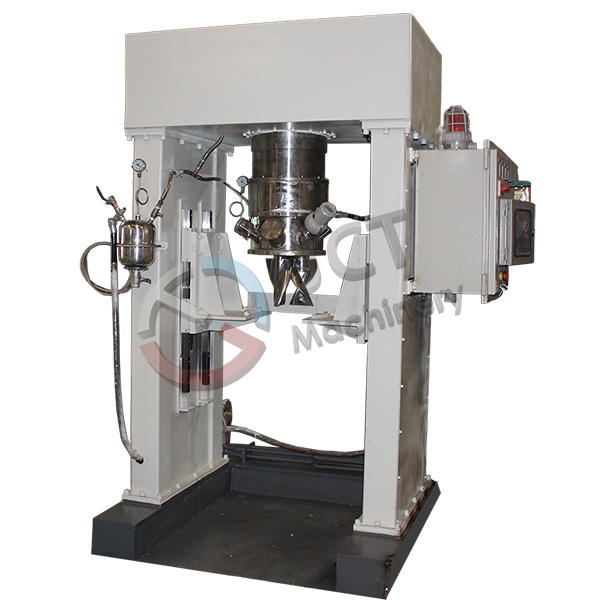
| Liquid silicone rubber (LSR) | Kneader + planetary power mixer + high-speed disperser |
| Silicone sealant | Triple-shaft disperser |
If your target is a compounded rubber — the solid, millable material used for HTV moulding, extrusion and further processing — the kneader is the machine to specify. If you are producing a pumpable liquid silicone, the process shifts toward planetary mixing and dispersion.
A real configuration: the 500L HTV silicone rubber kneader
The following is an actual JCT build, not a generic catalogue description:
| Item | Configuration |
|---|---|
| Type | Horizontal kneader, nominal 500L, full volume ≈550L |
| Blades | Sigma type, two sets, cast-steel core rough-turned then clad with SS304 plate, 42/28 rpm |
| Chamber | W-shape, SS304, 10 mm wall, 6 mm carbon-steel jacket with internal flow-guiding plates, material and cooling-water temperature display |
| Drive | 37 kW 6-pole motor + hardened-gear reducer, frequency control, forward/reverse mixing |
| Shaft seals | PTFE packing, 4 sets — selected so packing wear particles do not enter the chamber |
| Lid | 8 mm SS304, DN100 illuminated sight glass, hydraulic opening up to 75° |
| Insulation | Two internal insulation layers, δ1 mm stainless cladding |
| Vacuum | 2BV-5111 liquid-ring pump + 200 L Q235-B vacuum tank |
| Discharge | Hydraulic tilting, ≥95° |
Product-contact parts are SUS304 as standard, with SUS316L available as an option; shell plate thickness exceeds 8 mm and surfaces are polished above 200 mesh. On machines from 5 to 50 L the blades are fully stainless; above 100 L they use a cast-steel core with stainless cladding — the construction used on the 500L machine above.
From a single kneader to a complete compounding line
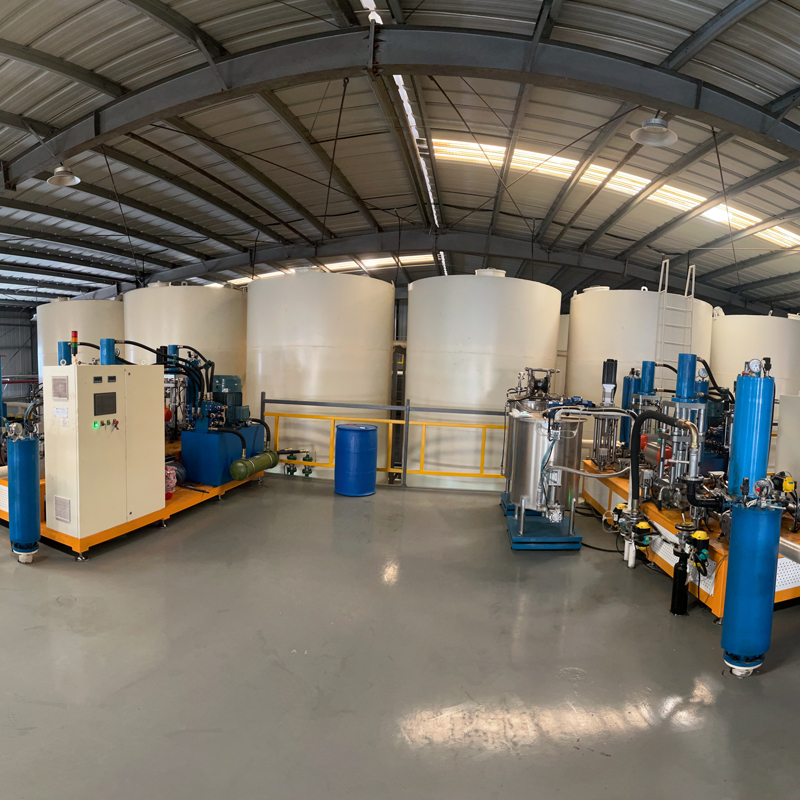
A kneader is the heart of the line, but not the whole line. A JCT 2000L HTV silicone rubber line, for example, is built around a 2000L kneader (full volume 2200L, SS304, 28 rpm, 160 kW drive) and continues downstream with an open two-roll mill for finishing and a chiller for temperature control. Whether you need one kneader or the full line, the upstream and downstream equipment should be specified against the same material and output target — that is what a source factory can engineer in-house.
Why work with the manufacturer directly
JCT Machinery was established in 2006 and has around 20 years of experience in high-viscosity mixing equipment. The company builds in its own factory, supports custom configuration rather than catalogue-only supply, and has delivered to more than 3,000 clients across seven export regions. It holds 17 utility-model patents and 2 software copyrights, with ISO 9001 and ISO 14001 certification and CE marking. Around 95% of production lines are customized. Custom projects typically start with a 3D demonstration and drawing within three days, and customers are welcome to run trial mixing with their own material before ordering.
Lead time is quoted at 30–60 days, with 30 days achievable for standard configurations, and JCT provides three years of after-service support.
Tell us your material, and we will specify the machine
The right kneader depends on your compound's viscosity, filler loading, batch size and thermal behaviour — not on a catalogue number. Send us your silicone rubber type, target batch volume, filler system and discharge preference, and we will return a configuration with the blade, drive, heating and vacuum options matched to your process.
JCT Machinery — horizontal kneaders and sigma blade mixers for silicone rubber compounding, from laboratory units to complete HTV production lines. We don't just sell machines — we make your production line run.
 How Is an Industrial Chemical Reactor Manufactured? A Complete Guide to the Manufacturing Process
 You May Also Like


 Tel
 Email
chemicalmixingtank2004@gmail.com
 Address
Donglian Jincheng Industrial Zone, Danzao Town, Nanhai District, Foshan City, Guangdong Province, China