





 CN


 HOME
How Is an Industrial Chemical Reactor Manufactured? A Complete Guide to the Manufacturing Process
 Nov 13,2026

 JCT
How Is an Industrial Chemical Reactor Manufactured? A Complete Guide to the Manufacturing Process
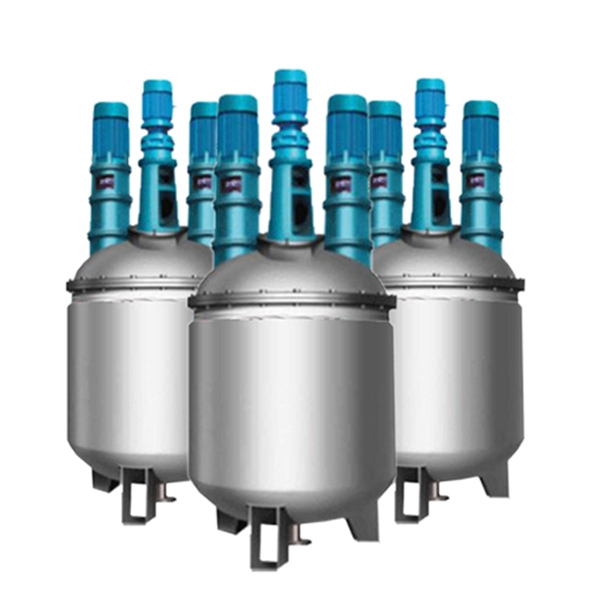
An industrial chemical reactor is a critical piece of equipment used in chemical processing, resin production, adhesive manufacturing, coatings, and other industrial applications. Its manufacturing quality directly affects production efficiency, process stability, equipment service life, and operational safety.
As a chemical reactor manufacturer, JCT Machinery focuses on the complete manufacturing process, from material selection and vessel fabrication to welding, machining, assembly, and final inspection. Understanding these manufacturing stages helps buyers evaluate reactor suppliers and select equipment that meets their production requirements.
1. Engineering Design and Material Selection
The manufacturing process begins with engineering design. Before fabrication, the manufacturer needs to understand the customer's production requirements and determine the appropriate reactor structure and configuration.
Key design considerations include:
- Working capacity: Determines the reactor's overall dimensions and internal volume.
- Operating temperature: Influences the vessel material, heating system, and cooling configuration.
- Working pressure: Determines the required vessel thickness and structural design.
- Material compatibility: Ensures that the wetted parts are suitable for the chemicals being processed.
- Mixing requirements: Determines the agitator type, motor power, and mixing structure.
- Heating and cooling requirements: Determines whether to use a jacket, half-pipe coil, or another heat-transfer structure.
Stainless steel is commonly selected for chemical reactors because of its corrosion resistance, mechanical properties, and suitability for various industrial processes. Depending on the chemical composition and operating conditions, different stainless steel grades or other materials may be required.
Material selection should always be based on the actual process conditions rather than price alone.
2. Raw Material Cutting and Preparation
After the engineering drawings and material specifications are confirmed, the manufacturing process moves to material preparation.
Metal plates and other components are cut according to the dimensions specified in the fabrication drawings.
Typical preparation operations include:
- Plate cutting and sizing
- Edge preparation for welding
- Surface cleaning
- Material identification and inspection
- Preparation of vessel heads, jacket plates, and structural components
Accurate cutting and edge preparation are important because they influence subsequent assembly accuracy and welding quality.
For reactors with special structural requirements, the manufacturing team must also prepare the components for jackets, internal coils, support structures, and discharge connections.
3. Vessel Rolling and Forming
Vessel forming is one of the key stages in reactor manufacturing.
For cylindrical reactor bodies, metal plates are rolled into the required cylindrical shape using plate rolling equipment. The formed sections are then prepared for longitudinal welding and subsequent assembly.
The vessel head is manufactured through an appropriate forming process according to its design.
Depending on the reactor structure, the manufacturing process may involve:
- Cylindrical shell rolling
- Vessel head forming
- Jacket shell forming
- Flange and nozzle preparation
- Structural component fabrication
Forming accuracy is important for maintaining dimensional consistency and ensuring proper alignment during welding and assembly.
4. Welding and Fabrication
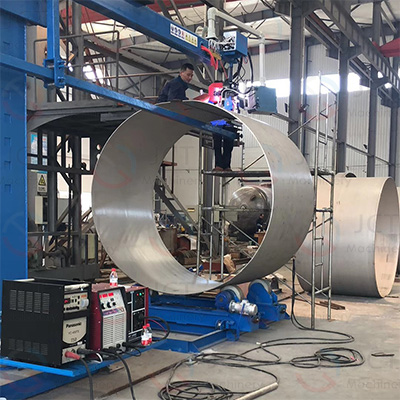
Welding is one of the most important processes affecting the structural integrity of a chemical reactor.
The vessel shell, heads, jackets, nozzles, and other components are joined according to the approved fabrication drawings and welding procedures.
Common welding processes include TIG welding, MIG/MAG welding, and other suitable methods depending on the material, thickness, and joint requirements.
During welding, manufacturers need to pay attention to:
- Weld joint preparation and alignment
- Welding parameters and procedure control
- Weld appearance and dimensional accuracy
- Prevention of excessive deformation
- Inspection of critical weld joints
For stainless steel reactors, welding quality is particularly important because poor welding practices may affect corrosion resistance and surface finish.
Where required by the project specifications or applicable standards, non-destructive testing (NDT), such as radiographic testing, ultrasonic testing, or penetrant testing, can be used to evaluate weld quality.
5. Machining and Surface Treatment
After the main vessel structure has been fabricated, machining and surface treatment are carried out according to the reactor's design requirements.
Typical operations include:
- Flange machining
- Nozzle and connection processing
- Installation surface preparation
- Internal and external surface polishing
- Stainless steel pickling and passivation, where specified
For reactors used in adhesive, resin, chemical, and cosmetic production, internal surface quality can be particularly important.
A suitable internal finish helps reduce material adhesion, facilitates cleaning, and supports stable production operations.
The required surface roughness and polishing grade should be confirmed according to the customer's process and cleaning requirements.
6. Jacket and Heating/Cooling System Fabrication
Many industrial chemical reactors require heating and cooling systems to control the reaction temperature.
Depending on the process requirements, the reactor may be equipped with:
- Full jacket
- Half-pipe coil
- Internal heating or cooling coil
- Electric heating system
- Other customized heat-transfer configurations
The jacket or coil is fabricated and connected to the reactor body according to the engineering design.
The heating and cooling system must be designed to match the required temperature range, heat-transfer medium, and production cycle.
For example, adhesive and resin production may require controlled heating to reduce material viscosity and maintain suitable reaction conditions.
The heating and cooling configuration should therefore be selected according to the actual production process rather than using a standard configuration for every application.
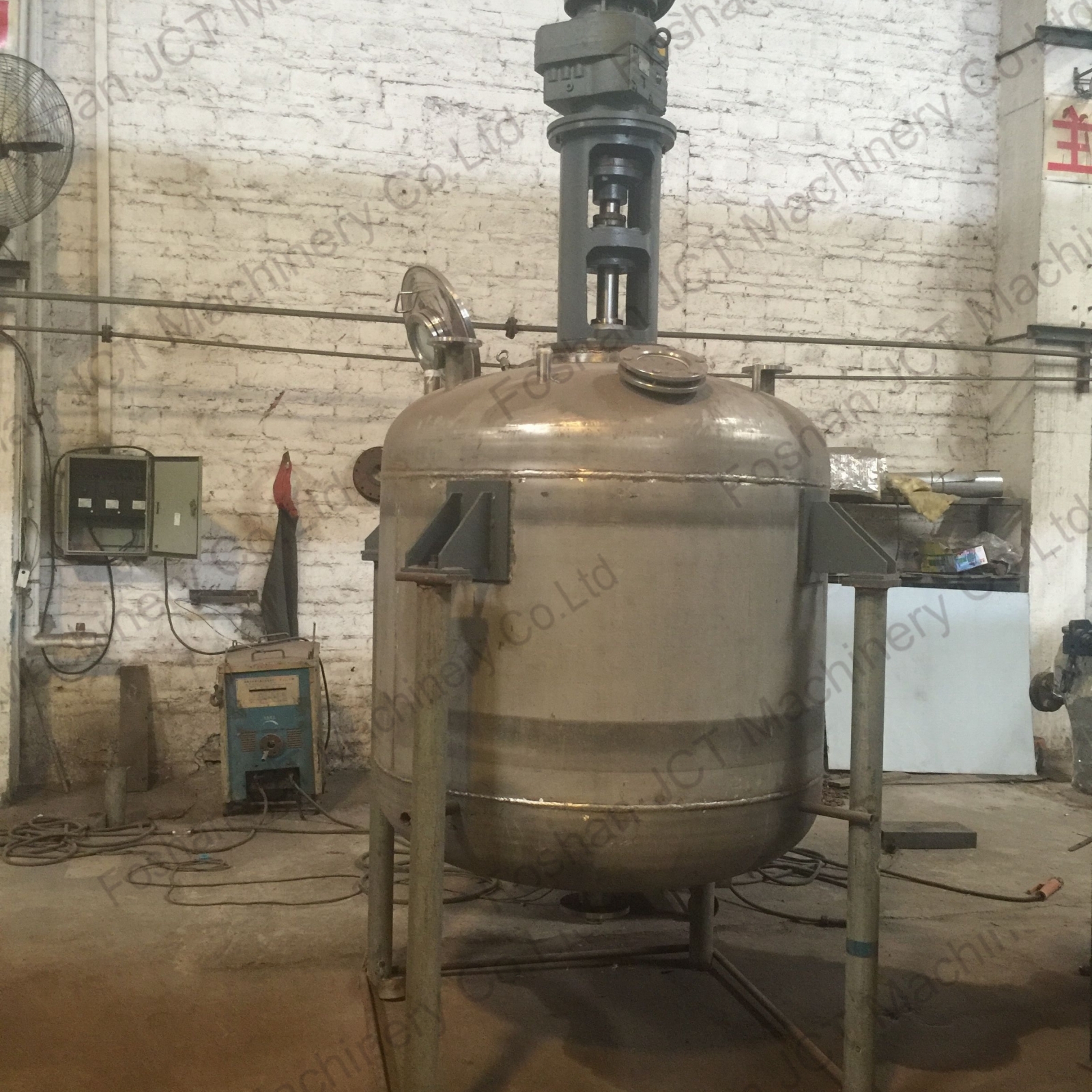
7. Agitator, Drive System, and Component Assembly
Once the vessel fabrication and surface treatment are completed, the reactor enters the assembly stage.
The main components are installed according to the engineering drawings and equipment configuration.
These components may include:
- Agitator and mixing shaft
- Motor and gearbox
- Mechanical seal
- Bearings and coupling
- Temperature sensors
- Pressure gauges and other instruments
- Valves and pipelines
- Control cabinet and electrical components
The agitator design is especially important because different materials require different mixing conditions.
For example, low-viscosity liquids, high-viscosity resins, and adhesive formulations may require different impeller structures and mixing speeds.
A customized agitator configuration helps the reactor better match the customer's material characteristics and production requirements.
8. Inspection, Testing, and Quality Control
Before delivery, the finished reactor needs to undergo inspection and testing according to its design specifications and applicable requirements.
Typical inspection and testing items may include:
| Inspection Item | Main Purpose |
|---|---|
| Dimensional inspection | Check vessel dimensions and component positions |
| Welding inspection | Evaluate weld quality and appearance |
| Pressure testing | Verify pressure-boundary integrity where applicable |
| Jacket testing | Check the integrity of the heating or cooling jacket |
| Agitator testing | Check rotation, operation, and mechanical performance |
| Electrical inspection | Check electrical connections and control functions |
| Trial operation | Verify the operation of the assembled equipment |
The exact inspection methods depend on the reactor design, operating pressure, applicable standards, and customer requirements.
For customized reactors, the inspection plan should be confirmed during the engineering stage to ensure that the final equipment meets the agreed technical specifications.
9. Final Assembly, Packaging, and Delivery
After inspection and testing are completed, the reactor is prepared for shipment.
Before packing, the manufacturer checks the equipment configuration, accessories, surface condition, and relevant technical documents.
Packaging methods depend on equipment dimensions, transportation distance, and shipping conditions.
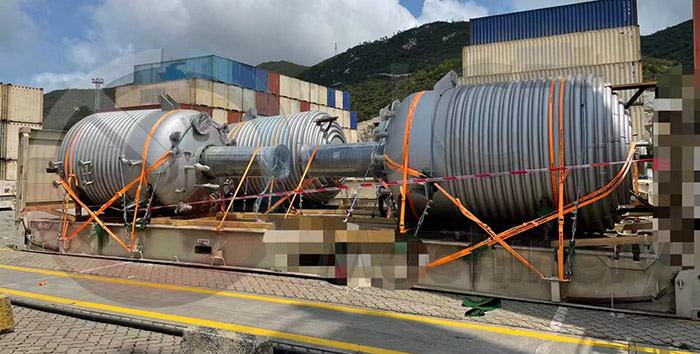
For medium and small equipment, protective materials and customized wooden crates can be used. Large equipment is secured appropriately after container loading to reduce movement during transportation.
For international projects, the manufacturer should also coordinate equipment dimensions, loading arrangements, and shipping requirements with the customer.
10. Why Manufacturing Quality Matters When Choosing a Reactor Manufacturer
When purchasing an industrial chemical reactor, buyers should look beyond the equipment price and appearance.
The manufacturing process provides important information about the supplier's technical capabilities and quality control.
Here are several factors worth evaluating:
- Material traceability: Can the manufacturer provide relevant material information and documentation?
- Fabrication capability: Does the factory have the capability to manufacture the required vessel structure and dimensions?
- Welding quality: Are welding procedures and inspection requirements properly controlled?
- Customization capability: Can the reactor be designed around the customer's operating conditions?
- Testing capability: Can the manufacturer perform appropriate inspections and functional tests before delivery?
- Technical support: Can the supplier provide installation guidance, technical assistance, and spare parts?
Choosing a manufacturer with appropriate engineering and fabrication capabilities helps reduce equipment selection risks and supports long-term production operations.
Conclusion
Manufacturing an industrial chemical reactor involves multiple stages, including engineering design, material preparation, vessel forming, welding, machining, surface treatment, component assembly, and final inspection.
Each stage contributes to the equipment's structural quality, operating performance, and service life.
At JCT Machinery, we manufacture customized mixing and chemical processing equipment for applications such as adhesives, resins, and chemical production. Our equipment solutions can be configured according to customers' material characteristics, production capacity, and process requirements.
Customers are welcome to contact our team to discuss reactor specifications, manufacturing requirements, and customized production solutions.
Frequently Asked Questions
1. What materials are commonly used to manufacture chemical reactors?
Stainless steel is commonly used for chemical reactors. The appropriate material grade depends on the chemical properties of the processed materials, operating temperature, pressure, and corrosion requirements.
2. How is the quality of a chemical reactor controlled during manufacturing?
Quality control involves material inspection, dimensional checks, welding inspection, surface treatment checks, pressure testing where applicable, and functional testing before delivery.
3. Can a chemical reactor be customized?
Yes. Reactor capacity, vessel structure, agitator configuration, heating and cooling systems, materials, and control systems can be configured according to the customer's production requirements.
4. Why is internal polishing important for a stainless steel reactor?
Internal polishing can help reduce material adhesion, improve cleanability, and meet specific production hygiene requirements. The required finish depends on the application.
5. Can customers inspect or test a reactor before delivery?
Customers can discuss factory inspection and testing arrangements with the manufacturer. JCT Machinery also supports customer-supplied raw material trials at its factory, with on-site or video-witnessed testing available.
 How The Right Mixing Equipment Improves MS Glue Product Quality?
 You May Also Like


 Tel
 Email
chemicalmixingtank2004@gmail.com
 Address
Donglian Jincheng Industrial Zone, Danzao Town, Nanhai District, Foshan City, Guangdong Province, China