





 CN


 HOME
How to Select a Grease Reactor: Configuration, Materials and Heating Explained
 Nov 24,2026

 JCT
How to Select a Grease Reactor: Configuration, Materials and Heating Explained
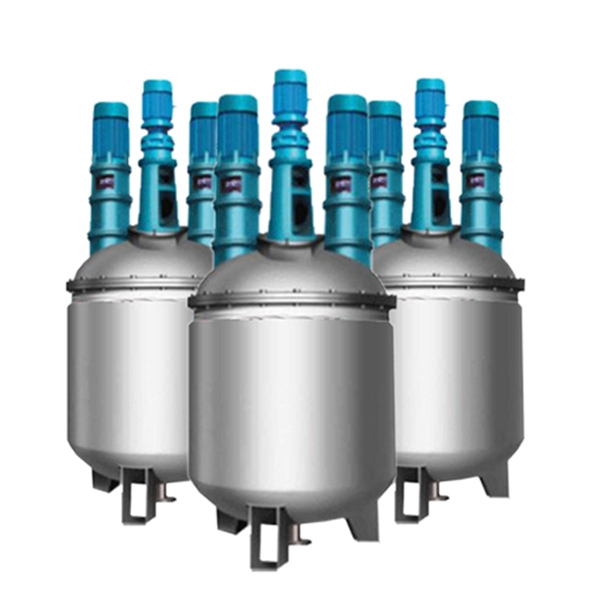
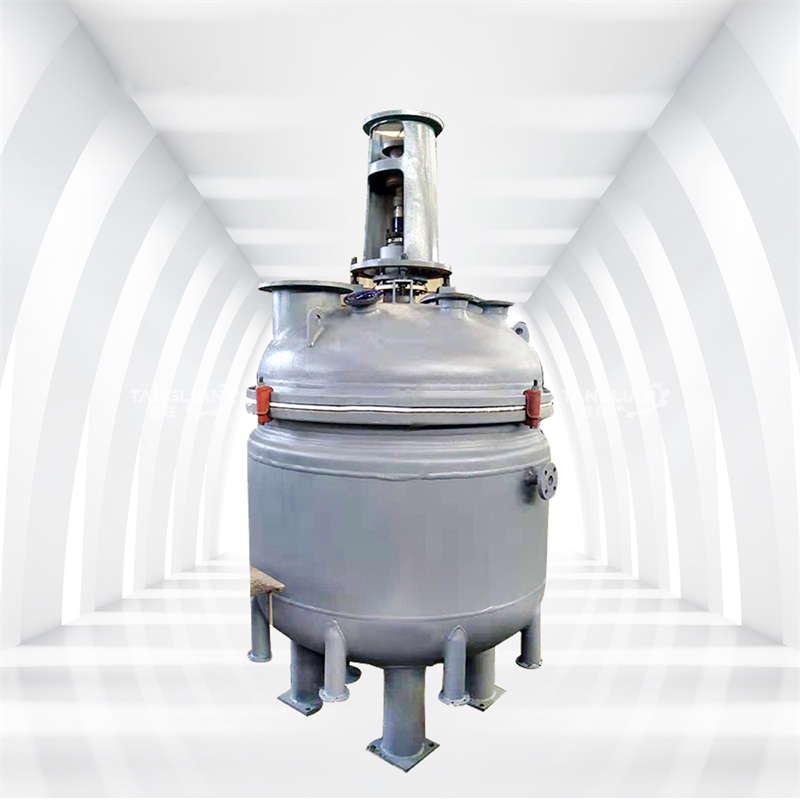
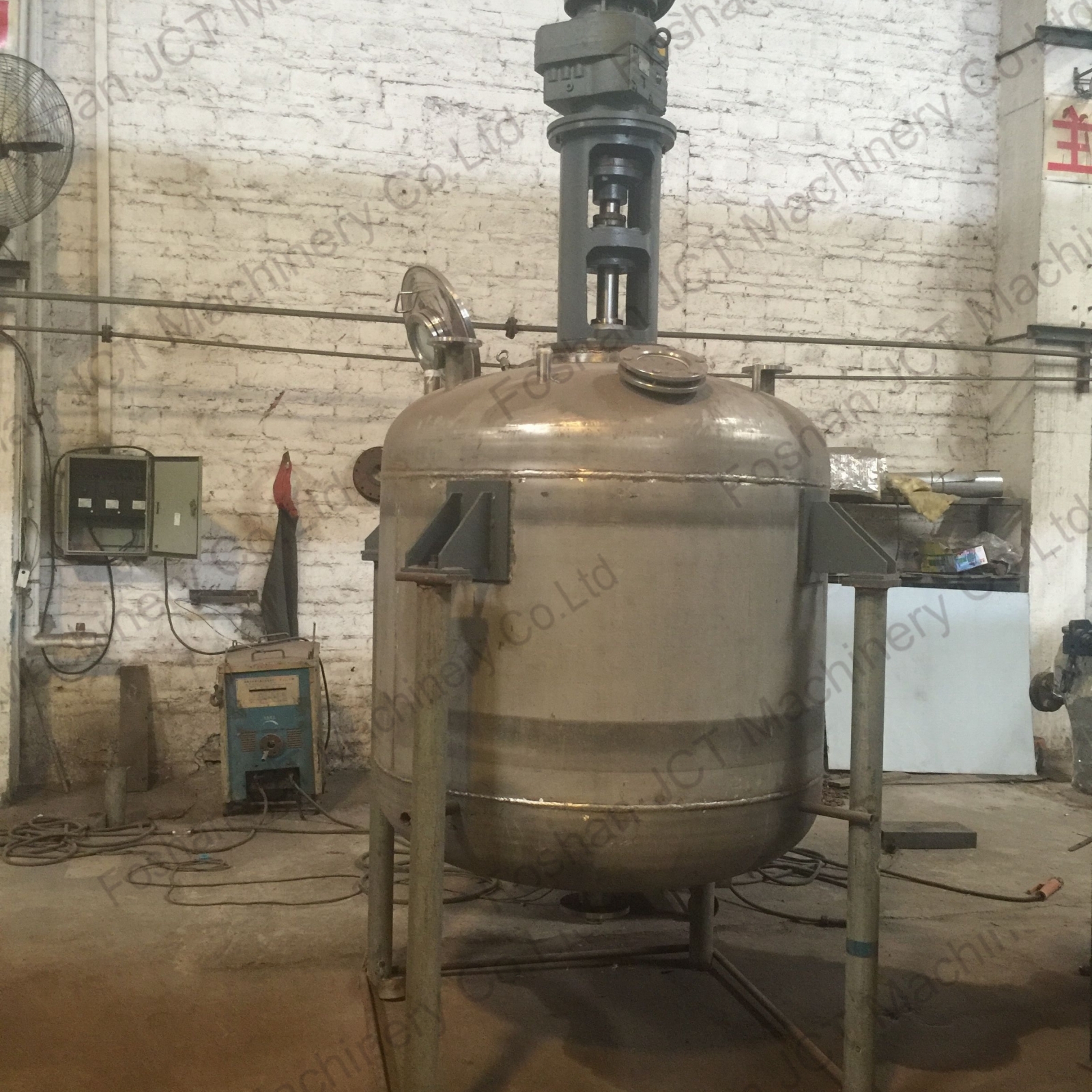
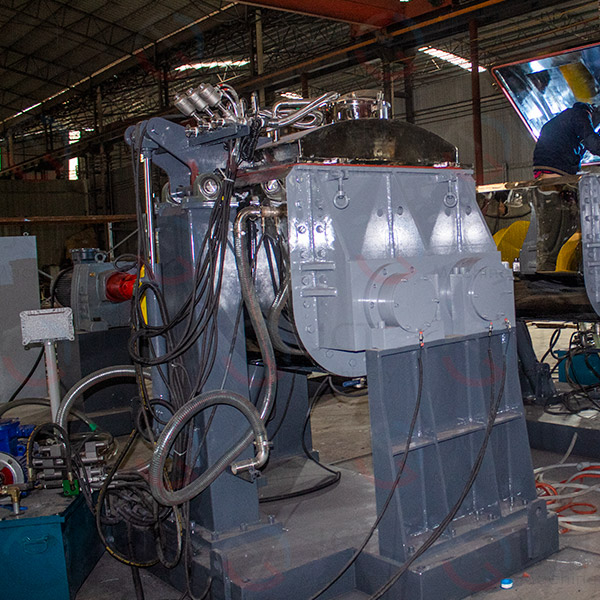
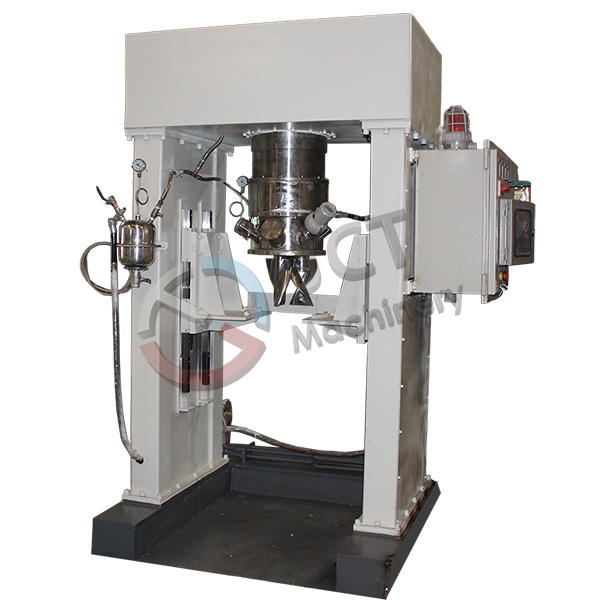
A grease reactor is a chemical reactor configured for the heating, mixing and cooling that grease production requires. Selection comes down to four variables — design volume, agitator type, contact material and heating method — and all four are determined by your formulation and process, not by a standard catalogue.
Why reactor selection decides a grease line's ceiling
In lubricating grease production, the reactor is the core equipment — the vessel where the base oil and thickener are heated, reacted and mixed before the product moves downstream. Buyers often focus on volume first and treat the rest as detail. That is a mistake. A reactor with the right volume but the wrong agitator or heating structure will leave the batch uneven, slow the cycle, or force rework that no downstream step can fix.
The practical question is not "how many litres?" It is "what does my formulation need in terms of mixing, temperature and material contact?" Answer that first, and the configuration follows.
The reactor's job in grease production
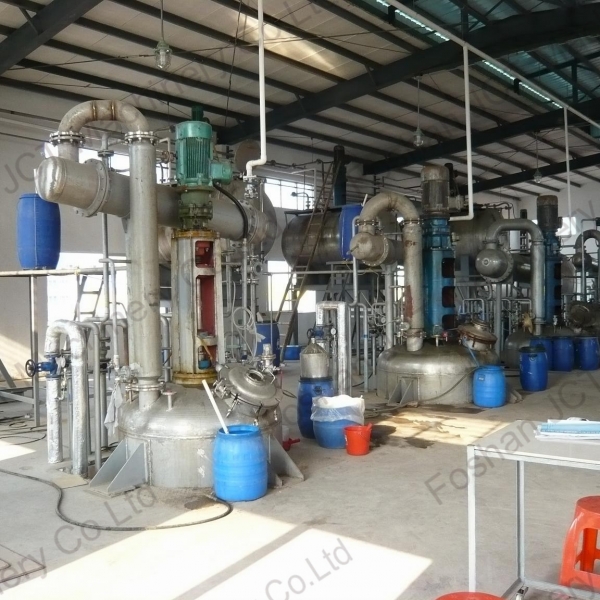
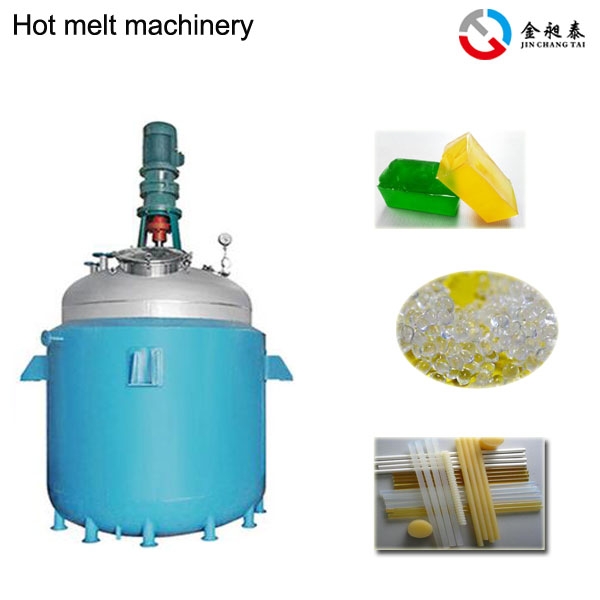
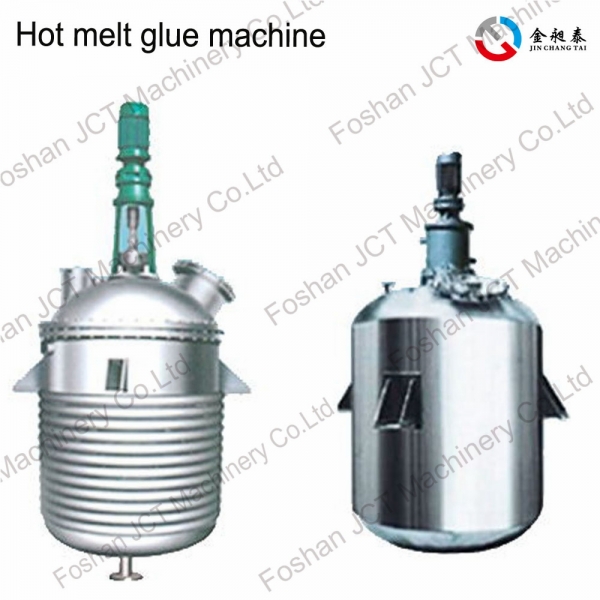
A reactor is a reaction vessel designed around a process. By setting the vessel structure and parameters, it delivers the heating, reaction, cooling and mixing the process requires. JCT's own product mapping lists the lubricating grease line under the grease and lubricant category, with the reactor as its core equipment — the same category as resin, water-based adhesive and silicone oil lines.
For grease, that means the reactor must do three things well: heat the charge to the required temperature, keep it homogeneous while it reacts, and then cool it under control. The reactor operation guidance specifies exactly this sequence — moderate heating to avoid sudden temperature rise, real-time monitoring of temperature, pressure and stirring speed, then controlled cooling once the reaction reaches its set point.
Four variables that define the configuration
1. Design volume. Reactors are made to order across 50–30,000 L, with volume designed as required. Grease producers should size against batch mass and cycle time, then leave headroom for the thickener's volume change during reaction — not simply match the target output.
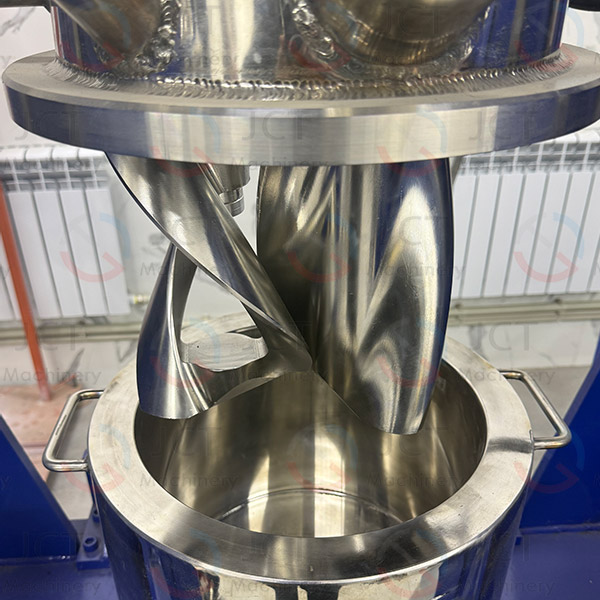
2. Agitator type. The available forms are paddle, anchor, frame, ribbon, turbine, disperser and combined. Grease is viscous, so the choice usually favours anchor, frame or ribbon forms that move material from the wall inward, rather than a high-speed disperser. The final call depends on viscosity and how the thickener behaves; JCT matches blade profile and torque to the actual material.
3. Contact material. Options are SUS304, SUS321 and SUS316L stainless steel, or Q235-B carbon steel. Stainless is selected when product purity or corrosion resistance matters; carbon steel where the process allows it.
4. Heating and heat transfer. Heating methods are electric, steam and water bath. Heat-transfer media are thermal oil, steam, hot water and electric. Heat-transfer structures are jacket, external half-pipe and internal coil. For grease, thermal oil through a jacket or half-pipe is common because it holds temperature evenly across a large vessel.
Technical parameters at a glance
| Parameter | Value |
|---|---|
| Design volume | 50–30,000 L (designed as required) |
| Reaction temperature | Ambient to 300 ℃ |
| Reaction pressure | -0.1 to 0.6 MPa |
| Material | SUS304 / SUS321 / SUS316L stainless steel, or Q235-B carbon steel |
| Stirring type | Paddle / Anchor / Frame / Ribbon / Turbine / Disperser / Combined |
| Heating method | Electric / Steam / Water bath |
| Heat transfer medium | Thermal oil / Steam / Hot water / Electric |
| Heat transfer structure | Jacket / External half-pipe / Internal coil |
Parameters are indicative; final configuration is designed around the material and process.
What to check beyond the data sheet
A reactor is also a pressure and temperature vessel, so the details around the specification matter as much as the numbers.
- Temperature control. Heating speed should be moderate — a sudden or excessive rise risks equipment damage and loss of material control. Heating and cooling circuits must be part of the design, not an afterthought.
- Sealing. Sealing integrity is checked before, during and after operation. Any leakage means stopping and repairing. For a grease reactor, the shaft seal is the component most likely to decide whether the batch stays clean.
- Monitoring. Temperature, pressure and stirring speed are monitored in real time, with action taken at once if any value goes abnormal.
- Safety accessories. Safety valves and overpressure protection are fitted and must be understood and maintained by operators. Maximum allowable pressure and temperature must never be exceeded.
These points are written into JCT's reactor operating guidance, which is supplied with the equipment. They are the reason a reactor should be bought from a builder who understands the process, not from a shop that only welds vessels.
Engineering support behind the reactor
JCT Machinery was established in 2006 and is a source factory for high-viscosity mixing and reaction equipment, not a trading company. Design, machining, assembly and trial running are done in-house, and around 95% of orders involve customized production lines. Reactors are built to order across the full parameter range above — there is no standard stock machine being relabelled for grease.
The same engineering detail used across JCT's high-viscosity range applies here: heavy-duty gear reducers for difficult material, multi-stage sealing with a vacuum balance structure, and PLC control with recipe management for batch repeatability. The company holds 17 utility-model patents and 2 software copyrights, and equipment spans 5 L lab machines to industrial units above 10,000 L. More than 3,000 customers have been served across seven export regions — North America, Europe, Africa, Southeast Asia, the Middle East, the CIS and South America.
Quality, delivery and support
JCT's quality and environmental management systems are certified to ISO 9001 and ISO 14001, and its equipment carries CE marking. Every project starts with a 3D process demonstration, with drawings issued within three days of process confirmation. Customers can run their own material in a trial before ordering. Standard machines ship in around 30 days; custom lines take 30–60 days, with extra time reserved for export packing. Each unit includes commissioning, operator training and three years of after-service support.
Send the process, and we will size the reactor
Tell us the base oil and thickener system, target batch size, working temperature and viscosity. We will specify volume, agitator, material and heating together — and tell you why each choice was made, rather than hand you a catalogue number.
JCT Machinery — source factory and turnkey partner for reactors, mixers and complete production lines. We don't just sell machines — we make your production line run.
Contact: chemicalmixingtank2004@gmail.com · mixmachinery.com
 What machine is used for silicone rubber mixing?
 You May Also Like


 Tel
 Email
chemicalmixingtank2004@gmail.com
 Address
Donglian Jincheng Industrial Zone, Danzao Town, Nanhai District, Foshan City, Guangdong Province, China