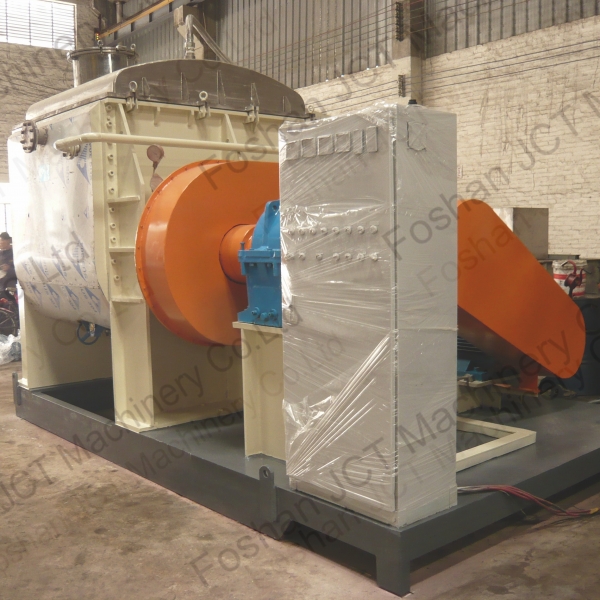
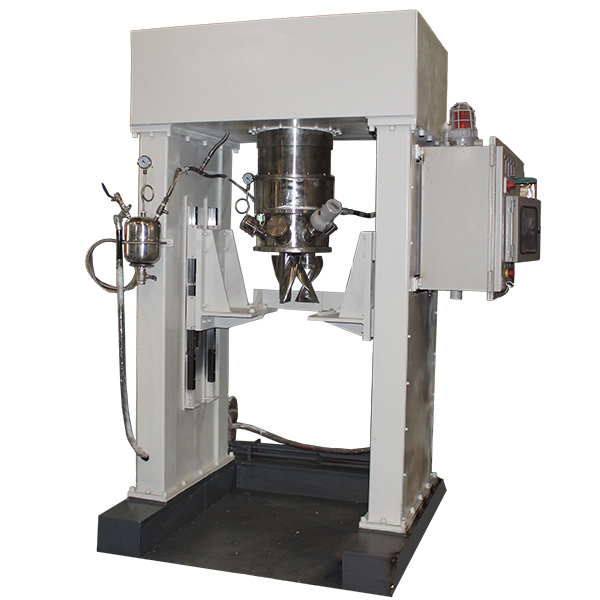
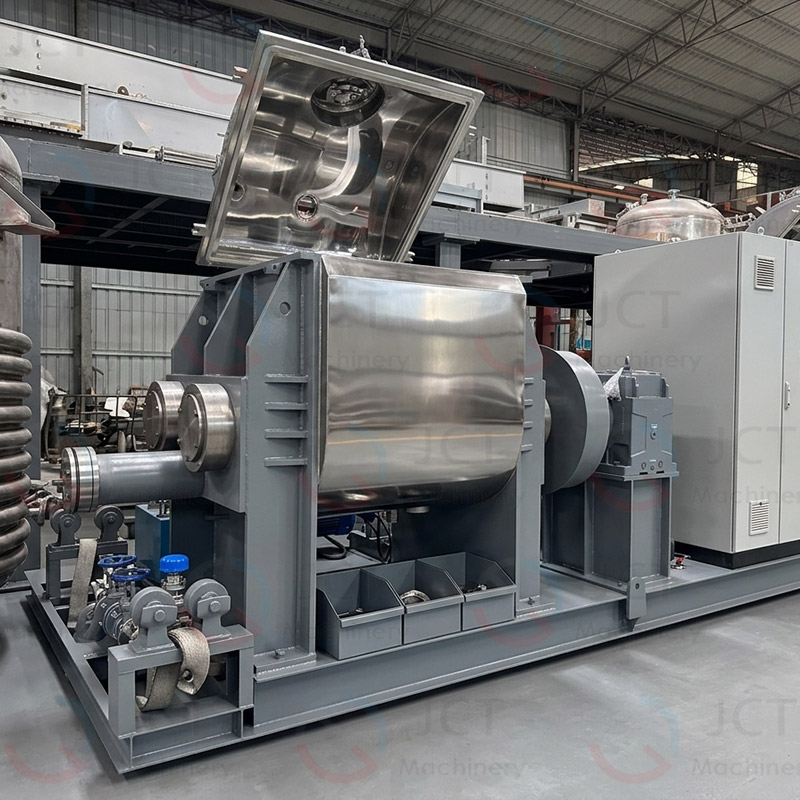
The key to JCT's liquid silicone rubber sigma mixer's ability to efficiently process materials—characterized by extremely high viscosity (ranging from hundreds of thousands to millions of cP), high filler absorption (such as white carbon black), and extreme sensitivity to cleanliness—lies in its unique structural designs addressing sealing, contamination prevention, fluid dynamics, and heat transfer.
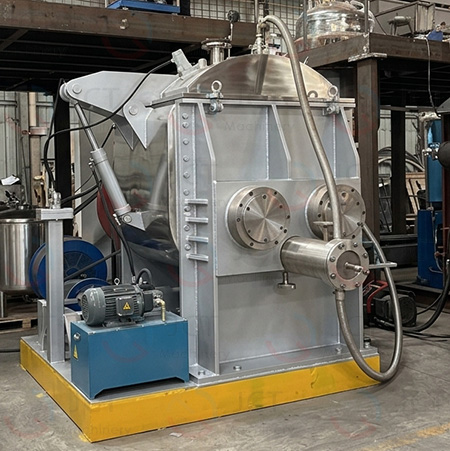
The following outlines the core, unique structural design of JCT liquid silicone rubber sigma mixer:
Ⅰ. Shaft Sealing System: Multi-seal Design
The primary challenges in silicone rubber production are dust ingress into the bearings causing wear, and the leakage of shaft seal lubricant into the mixing chamber, which contaminates the silicone rubber.
- Oily PTFE: Located on the outermost side, its lip-shaped structure forms a radial seal, preventing grease leakage or the intrusion of external dust and moisture, serving as the last layer of "insurance".
- V-shaped Compression Material: It can be used as an auxiliary seal or dust ring. Through its elasticity and adjustable compression ratio, it can further improve the axial sealing ability, especially blocking particulate matter and external impurities.
- Skeleton Oil Seal: It provides the main seal, utilizing its excellent chemical stability, self-lubricating properties and high temperature resistance to form the first line of defense against high viscosity, corrosive or high temperature media.
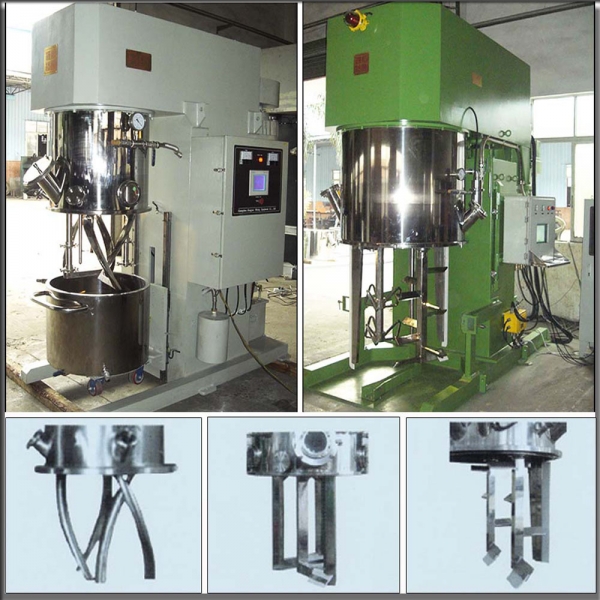
Ⅱ. Blade Structure: Asymmetric Differential-speed ∑-type and 3D Helical Flow Field
Conventional kneading blades struggle to generate the omnidirectional stretching and tumbling required for high-viscosity silicone, making the formation of localized dead zones likely.
- Asymmetric Speed Ratio Design: Two kneading blades rotate in opposite directions at a fixed speed ratio (typically 3:2). A strong velocity gradient is generated between the fast and slow shafts, subjecting the material to intense shearing, compression, and tearing forces.
- Variable Pitch and Helical Blade Edges: The blades feature specific helical angles on both their leading and trailing faces; this design ensures that the material is not only repeatedly kneaded laterally (between the shafts) but also circulates longitudinally (back and forth along the axis), effectively eliminating axial dead zones.
- High-precision Clearance Control: The gap between the outer edge of the blades and the inner wall of the vessel is precisely controlled within 2–3 mm, enabling wall-scraping and intense shearing; this ensures thorough mixing with no dead zones and achieves a homogenization level of over 99%.
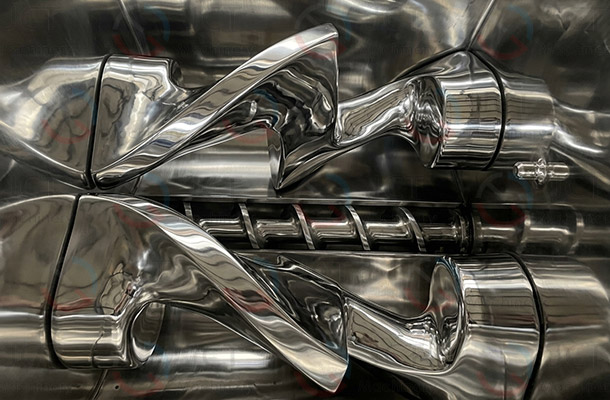
Ⅲ. Cylinder and Contamination-prevention Design: All-stainless-steel Mirror Finish and Dead-zone-free Structure
- All Material-contact Surfaces are Made of SS304/316: Components such as the kneading chamber liner, side plates, blades, and cover plate are constructed from high-quality stainless steel.
- Mirror-finish Polishing (Ra ≤ 0.4 μm): The inner walls and blade surfaces undergo high-precision polishing, significantly reducing silicone adhesion; this enhances kneading efficiency and greatly facilitates color changes and Cleaning-in-Place (CIP) procedures.
- Arched Cover Design and Large-diameter Vacuum Port: The underside of the top cover features an arched transition to prevent dust from scattering and accumulating in dead zones; it is equipped with an explosion-proof sight glass, LED lighting, and a vacuum exhaust port designed to prevent foaming.
Ⅳ. Highly Efficient Heat Transfer and Temperature Control Structure
Liquid silicone rubber is extremely sensitive to temperature: excessively high temperatures cause premature cross-linking (pre-vulcanization or gelation) of the silicone, while excessively low temperatures result in a slow surface modification reaction for the white carbon black.
- Fully Enclosed Honeycomb Jacket / Spiral Baffle Jacket: Flow-directing jackets are integrated into the bottom and both side plates of the kneading vessel, ensuring that the heating/cooling medium (thermal oil or cooling water) flows rapidly and uniformly within the jacket, with no stagnant zones.
Liquid Silicone Rubber Screw Discharge Sigma Mixer Equipment Parameters
Model
|
Cylinder Volume
|
Motor Power (kW)
|
Heating & Cooling Mode
|
Weight
|
Dimension
|
| Full Volume |
Working Volume |
| NHZ-200 |
200 |
140 |
11-18.5 |
1) circulation heating of heat transfer oil
2) electricity heating in jacket
3) steam heating
4) cold water / cold oil circulation cooling
|
1800kg |
2.9*1.3*1.7m
|
| NHZ-300 |
300 |
210 |
15-22 |
2400kg |
3.2*1.45*2.1m
|
| NHZ-500 |
500 |
350 |
30-45 |
3500kg |
3.5*2*2.3m
|
| NHZ-1000 |
1000 |
700 |
45-110 |
4800kg |
4.3*1.95*2.6m
|
| NHZ-2000 |
2000 |
1400 |
45*2-110*2 |
7500kg |
5.1*2.3*2.9m
|
| NHZ-3000 |
3000 |
2100 |
55*2-160*2 |
10000kg |
5.8*2.6*3.2m
|
| NHZ-5000 |
5000 |
3500 |
75*2-200*2 |
15000kg |
6.8*3*3.5m
|
Get free quote of liquid silicone rubber sigma mixer!
Tel: +86-181 3837 3963 (Whatsapp, Wechat)
Email: chemicalmixingtank2004@gmail.com
Get free quote of liquid silicone rubber sigma mixer!
Tel: +86-181 3837 3963 (Whatsapp, Wechat)
Email: chemicalmixingtank2004@gmail.com







 CN


 HOME


 Related Suggestion
 Jul 25,2024


 Tel
 Email
 Address